
5 Days, 4 Books: A Fresh Framework for Your Farm's New Year
A new year brings fresh hope—and maybe even a resolution or two. But how often do those well-meaning goals turn into little more than wishful thinking by February?
This week, we’re tackling that challenge head-on with a five-day blog series designed to sharpen your focus, inspire habit change, and bring practical structure to your farm's operations. Each day, we’ll explore one impactful book that’s shaped how I approach leadership, systems, and growth in my business. These aren’t just good reads—they’re tools I’ve tested myself.
Whether you're managing a large team or running solo, this series is built to help you set meaningful goals, develop sustainable habits, and ultimately make the changes that matter most.
Do you have a question or would you like to explore any of these ideas further? Give me a call. I’ve read every book we’ll cover—and I’d love to help you figure out how they can work for your operation.
Day 1: Measure What Matters by John Doerr – Goal Setting That Actually Works
“Goals that are not written down are just wishes.” – Fitzhugh Dodson (attributed)
Do you set goals for your farm? Why not?
Have you ever felt that there is so little in your control that setting goals almost feels meaningless?
Let me introduce John Doerr.
John Doerr is a Venture Capitalist who introduces the framework of OKRs – Objectives and Key Results – in his book Measure What Matters. The strategy behind the framework is to be able to guide an individual and/or an organization toward a goal with key action items or outcomes that, if these are attained, it is doubtful, if not impossible, that the general goal isn’t met or exceeded.
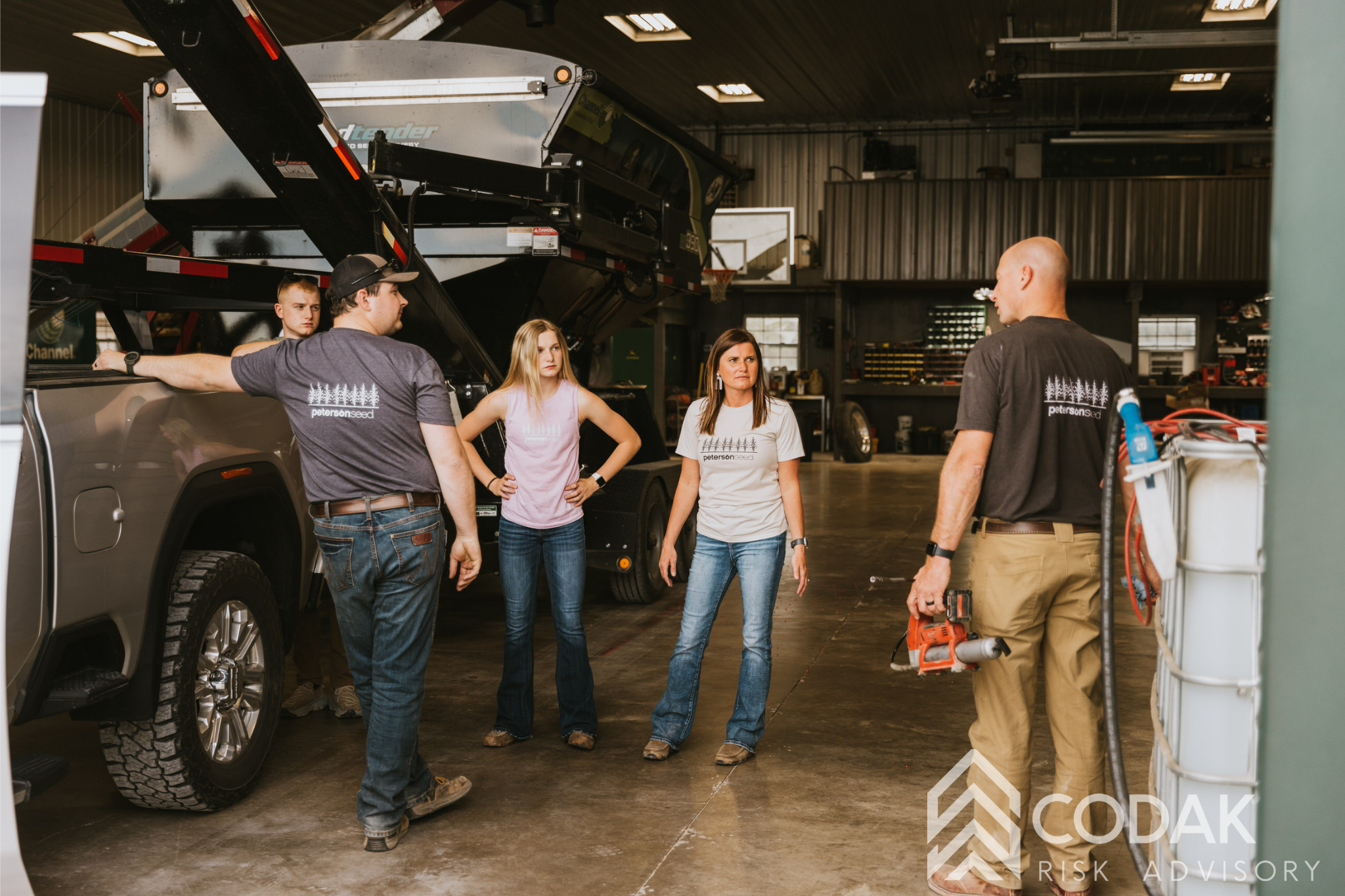
Image from Real Ag Stock
Why OKRs Work on the Farm
Farming is unpredictable—weather, markets, pests—but what you can control is your clarity, your focus, and your team’s alignment.
Think about it: wouldn’t it be great if your whole team were moving toward the same goal with clear direction and ownership? That’s where OKRs come in.
What is an OKR?
Let’s break it down. The “O” in OKR stands for Objective(s) and is the prioritized goal that is significant, concrete, and inspirational. The “KR” stands for Key Results, which are how you measure success , or , in my opinion, the outcomes that are specific, time-bound, and measurable.
The beauty of OKRs is that if your Key Results are achieved, the Objective is almost certainly met—or even exceeded.
OKRs are great and used by companies such as Google and Intel, but how can they work for your farm? Let’s start by figuring out what is most important on your farm – the people involved.
Wouldn’t it be great to be working towards a common goal?
How do you do that if everyone doesn’t know what that goal is?
Rules of Thumb for Writing OKRs
Objectives:
Keep inspiring and clear – answering what
Keep them few and focused – max of 3 per season
Align with your Mission
Key Results:
Measurable and time-bound – you’ll know you’ve succeeded when
Keep them simple with 3-5 KR’s – make tracking easy
Stretch – not too easy, but realistic
No tasks – only outcomes
Now that we’ve laid out what exactly OKRs are and some baseline rules on how to create them. Let’s look at some examples. Keep in mind that the strengths and weaknesses in operations are different from their goals.
Real Farm-Focused OKR Examples
Example Objective: Create Standard Operating Procedures (SOPs) for Team Alignment
Key Results
Document SOPs for planting, spraying, and harvest by April
Train 100% of team members before planting season
Reduce operational errors by 20% compared to last year
Example Objective: Strengthen Risk Management Across the Operation
Key Results
Develop a hedging plan and tracking system by Feb 15
Improve marketing knowledge skills to optimize key aspects of marketing program by planting
Conduct two financial stress-test scenarios before June
Example Objective: Improve Farm Drainage for Long-Term Soil Health
Key Results
Tile 10% of poorly drained acres in 2026
Complete drainage mapping for 50% of key fields by June 30th
Reduce standing water incidents by 30% in 2026
Bottom Line
You don’t need to copy these OKRs word-for-word. What matters is taking the time to set your own written goals backed by measurable steps. Research shows that writing down goals increases the likelihood of achieving them by 42%.
One of the biggest barriers to success isn’t lack of ideas—it’s lack of communication. Whether you manage a large team or work alone, clarity creates momentum.
Looking to get started? Measure What Matters is listed on Amazon for under $10. A small investment that could help you create a major impact this year.

Garret Brown
Founder | Market Advisor
Having grown up on a farm, Garret respects the wide range of skills needed to run a successful operation and recognizes farmers are often stretched thin trying to do it all. This understanding, along with his affinity for markets, fuels his drive to make tough marketing decisions simpler for farmers.
Leveraging his experience in grain origination and margin management, Garret analyzes technical and fundamental market information. With the assistance of CODAK’s algorithmic signaling platform, he puts together buy/sell recommendations while working with the CODAK team to create strategies that accommodate each farmer’s personal risk tolerance, on-farm storage capacity, and break-evens.